


Author’s note: These views are my own and should not be attributed to my employer or any organization with which I am associated.
This is my best attempt to steel man what defenders of the current immigration enforcement crackdown believe is happening — and why they see protests against ICE not as principled dissent, but as reckless and dangerous.
The story goes something like this:
The United States is facing a prolonged crisis of border control and immigration enforcement. For years, successive administrations failed to meaningfully enforce existing laws, creating powerful incentives for illegal entry and overwhelming the system’s ability to vet those entering the country. Even if only a small fraction of those entering unlawfully are violent criminals, cartel affiliates, or repeat offenders, that failure is viewed as unacceptable. The government’s first responsibility, in this view, is to protect public safety.
The distinction between “criminal” and “non-criminal” immigration violations is misleading. Unauthorized entry and unlawful presence are themselves violations of federal law, and selective or discretionary enforcement undermines the rule of law. Immigration is now unlawful in principle only when it bypasses lawful procedures. If legal pathways are slow or restrictive, that is a problem for Congress, not a justification for ignoring enforcement altogether.
Under this framework, the Trump administration’s approach is not radical but corrective. The government is simply enforcing statutes that should have been enforced consistently for decades. That enforcement necessarily requires federal agents to operate in public spaces, often in hostile environments, and to do so decisively.
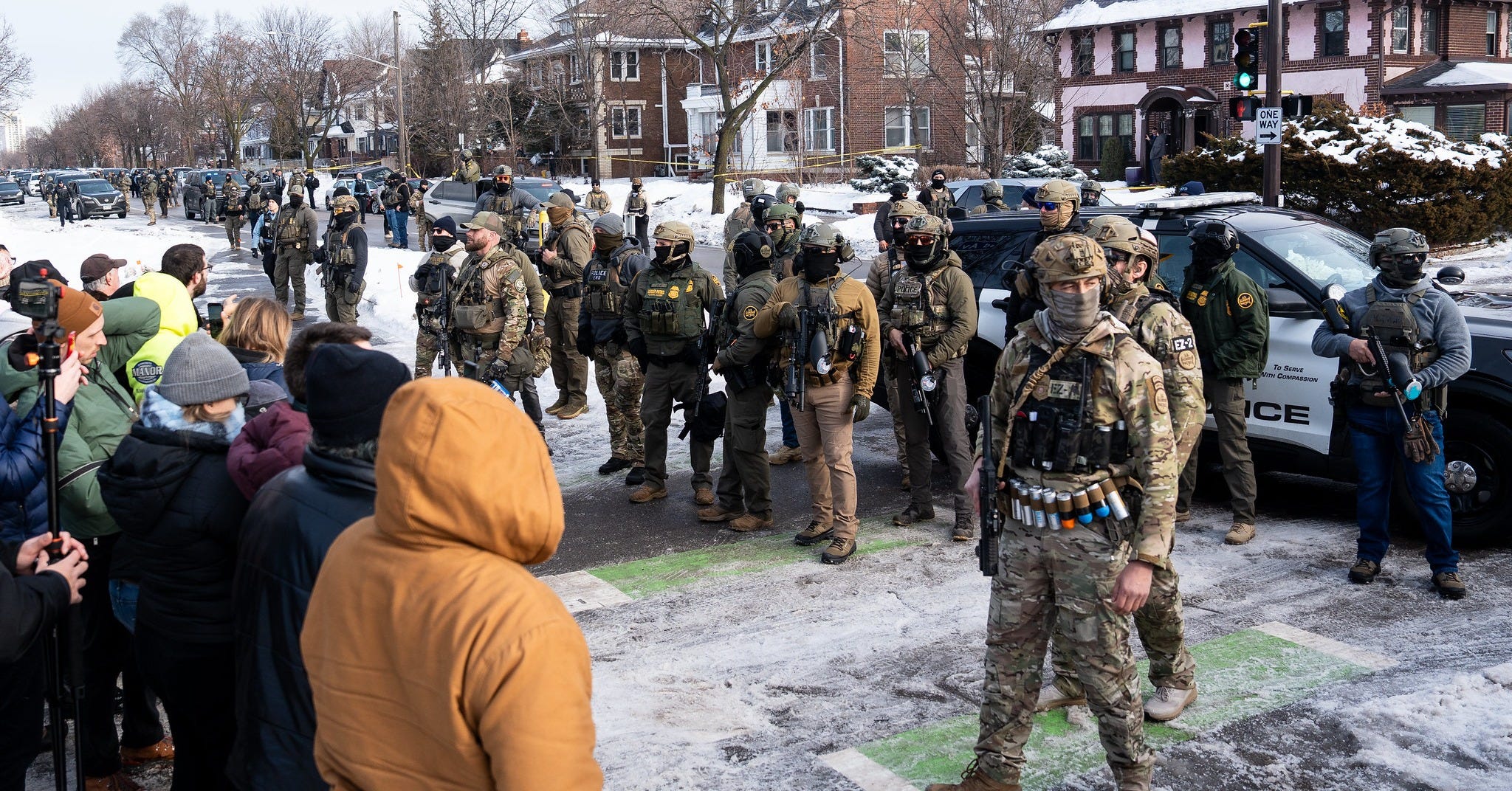
ICE protestors are not acting in good faith, but are actively obstructing law enforcement. Protests have shifted from general opposition to direct interference — surrounding officers, filming at close range, following agents, or refusing to disperse. This moves from peaceful opposition into obstruction of lawful federal operations, constitutes a felony.
ICE and Border Patrol agents must be given broad latitude to control scenes that can rapidly become volatile. Officers cannot safely assess intent in real time, especially when crowds are involved. If individuals resist arrest, refuse lawful orders, or introduce firearms into enforcement environments, agents may be forced to make split-second decisions to protect themselves and others. Tragic outcomes, while regrettable, are foreseeable consequences of interference, not as evidence of misconduct.
Protestors should comply with all orders from federal agents and should take responsibility for their actions if they resist. The responsibility for tragic outcomes lies not with the agents enforcing the law, but with those who chose to place themselves in the middle of enforcement actions — and with political leaders who encouraged confrontation rather than compliance.
Assumptions Versus Reality
Taken on its own terms, the pro-enforcement narrative has internal logic. A nation has the authority to enforce its laws and its borders, and public safety is a legitimate government interest. But that framework assumes that the laws being enforced are workable, targeted, and applied within constitutional bounds.
That assumption does not align with the facts.
To understand why protests against ICE enforcement have escalated, and why dismissing them as reckless obstruction misses the point, we must examine the system being enforced, how enforcement is carried out, and what happens when constitutional limits are treated as inconveniences rather than constraints.
To be clear, this is not an argument for violence against federal agents, nor a claim that unlawful conduct by the government licenses unlawful conduct by those who oppose it. It is an attempt to explain why resistance has intensified. The frustration animating these protests is not rooted in a distorted view of reality, but in prolonged exposure to a system that demands obedience while disregarding constitutional limits.
1. Our Immigration System Is Fundamentally Broken
For most people, immigration to the United States is impossible. According to a Cato Institute study, “fewer than 1 percent of people who want to move permanently to the United States can do so legally.”
Let’s look at the only ways that immigrants can become legal residents of the U.S.:
The refugee program: Qualified refugees have less than a 0.1 percent chance of being selected for resettlement, and only a few nationalities are even considered.
The diversity lottery: Diversity applicants have a 0.2 percent chance of receiving a green card, and because the lottery excludes the top origin countries for legal immigrants, a majority of the world’s population is ineligible to apply.
Family sponsorship: In addition to spouses, minor children, and parents of adult U.S. citizens, family sponsorships are capped. The years of waiting caused by these caps mean that — except for sponsors of spouses and minor children of existing green card holders — most sponsors in these categories will die before their relatives can immigrate.
Employment-based self-sponsorship: These categories are only for those who are, in legal terms, “extraordinary,” have work of “national importance,” or can afford to make at least $800,000 in investments in the United States — not options for many.
Employer sponsorship: An almost insurmountable bureaucratic barrier restricts employer sponsorship, excluding nearly all workers without college degrees, and low caps will result in many applicants dying before they can obtain green cards. Employers make only 1 in 1,500 hires through this system.
The common refrain is that immigrants should come through the “front door” or via the legal process. But as Cato’s report shows, the legal process is unavailable for the vast majority of immigrants who want to come here. So it’s unsurprising that many people risk entering the country illegally to address labor market shortages and raise their standard of living.
In most cases, due to significant backlogs, we don’t even know the actual wait time for most immigrants to receive their green cards. For many, including high-skilled workers, the wait could be half a century or more, meaning many will die before their green card is approved.
A system that seeks to decrease illegal immigration needs to better align with the reality of supply and demand for immigrant labor, recognizing that most people who come here illegally do so for economic reasons.
2. The Administration’s Enforcement Efforts Are Not Just Targeting ‘Criminals’
The administration insists that ICE is focused on dangerous criminals. The record tells a different story.
Investigative reporting has documented more than 170 U.S. citizens detained by immigration agents in the first nine months of the administration alone. These detentions occurred during raids, protests, and routine encounters, often after individuals clearly stated they were citizens and produced valid identification. Some were held for hours or days without access to lawyers or family members. Charges, when brought, frequently collapsed or were never filed at all.
ICE’s own policies help explain how this happens. New enforcement directives instruct officers to arrest virtually anyone they encounter and to initiate removal proceedings automatically, abandoning prior guidance that prioritized serious crimes or humanitarian concerns. Longtime residents, green card holders, DACA recipients, journalists, veterans, and even minors have been swept into detention.
Release on bond has become increasingly rare, even for people legally eligible for it, as ICE routinely appeals immigration judges’ release decisions to keep people locked up longer. Few people can secure release from immigration detention, which requires a habeas corpus petition. Most detainees lack legal counsel, and many immigration lawyers lack training in the complex process of filing a habeas petition.
3. DHS Is Ignoring Court Orders to Release Detainees
“There has been an undeniable move by the Government in the past month to defy court orders or at least stretch the legal process to the breaking point in an attempt to deny noncitizens their due process rights,” U.S. District Judge Michael Davis recently warned in a court order.
Another federal court ruling by Minnesota Judge Patrick Schiltz estimated that ICE had violated court orders 96 times in Minnesota in January alone.
Court orders have been ignored by ICE in New Jersey, Florida, Massachusetts, and Rhode Island, to name just a few other jurisdictions where the agency has either refused to release detainees or has moved detainees in defiance of federal courts.
An exasperated attorney for DHS recently told a Minnesota federal court that “the system sucks” and asked the judge to hold her in contempt “so that I can have a full 24 hours of sleep.” Judge Jerry Blackwell stated:
“The overwhelming majority of the hundreds [of individuals] seen by this court have been found to be lawfully present as of now in the country. In some instances, it is the continued detention of a person the Constitution does not permit the government to hold and who should have been left alone, that is, not arrested in the first place.”
[ . . . ]
“The volume of cases and matters is not a justification for diluting constitutional rights, and it never can be. It heightens the need for care. Having what you feel are too many detainees, too many cases, too many deadlines, and not enough infrastructure to keep up with it all is not a defense to continued detention. If anything, it ought to be a warning sign.”
4. ICE Detention Facilities Are Violating Human Rights
Once detained, many immigrants are placed in facilities that operate with minimal transparency and little accountability.
At Fort Bliss, the largest immigration detention center in the country, detainees have described physical abuse, sexual assault, medical neglect, and coercion to self-deport. Signed declarations and interviews with dozens of people held there report overcrowding, food shortages, unsanitary conditions, and denial of basic medical care. ICE reported that one man died after failing to receive timely treatment for liver and kidney failure.
These are not isolated incidents. In Louisiana, a contracted detention officer recently pleaded guilty to sexually abusing a detained woman over several months, exploiting his authority over her confinement. Civil rights groups have documented patterns of abuse, retaliation, and neglect across multiple facilities.
Immigration detention is a civil matter, not a criminal one. Yet people are being held in conditions that would raise serious constitutional concerns in any prison system.
5. ICE Is Violating the Fourth Amendment
The erosion of constitutional limits has not stopped at the treatment of detainees and the denial of habeas corpus. It extends to the manner in which arrests are carried out.
An internal ICE memo obtained by the Associated Press authorizes officers to forcibly enter homes using only administrative warrants, without approval from a judge. This represents a sharp break from longstanding Fourth Amendment norms, which require judicial warrants for nonconsensual entry into private residences. Administrative warrants are issued by immigration officials themselves, not neutral magistrates.
The memo has reportedly been used to train new officers, even though it contradicts prior written guidance and Supreme Court precedent. In practice, this has meant heavily armed agents entering homes, sometimes ramming doors, without judicial oversight.
The Fourth Amendment still applies in immigration investigations.
6. ICE Is Violating the First Amendment Rights of Protesters, Observers, and Critics
The public has a well-established First Amendment right to observe, record, and criticize law enforcement in public spaces. ICE and DHS leadership are now openly challenging that principle.
DHS officials have repeatedly claimed that filming or following ICE agents “sounds like obstruction of justice,” despite the fact that federal courts across the country have recognized recording police activity as protected speech. Internal DHS guidance has gone further, treating cameras, livestreaming, and even proximity to officers as indicators of potential violence.
This rhetoric has consequences. Journalists and bystanders have been detained, threatened, beaten, or arrested for filming ICE operations, even when they remained at a distance and did not interfere. A federal judge recently found that DHS plausibly adopted an unlawful policy suppressing protected First Amendment activity.
Furthermore, current and former DHS officials recently told the New York Times that ICE agents are using facial recognition technology meant for identifying undocumented immigrants to track citizens who have protested ICE. The agency is also reportedly using tools to track social media activity and individuals’ real-time locations.
DHS is also using administrative subpoenas — which can be issued without a judge or grand jury — to request data from technology companies, including Meta and Google, regarding individuals who have criticized the agency online.
When a Florida retiree sent an email to the state’s attorney general urging against the deportation of an Afghan asylum seeker, he soon received a notice from Google stating that “a Law Enforcement authority” had compelled the release of information related to his account. Then, federal agents showed up at his door. Google received over 28,000 subpoenas in the first 6 months of 2025 alone.
Tracking protestors and monitoring their online activity is an effort to intimidate and chill protected First Amendment activity.
7. ICE Has a History of Using Deadly Force
The killing of Alex Pretti and Renee Good did not occur in a vacuum. ICE and Border Patrol have a documented history of using deadly force in ways that later raise serious factual and legal questions.
Investigations by Type Investigations and The Marshall Project have catalogued dozens of shootings involving ICE and Border Patrol officers over the past two decades, many of them during routine enforcement actions rather than high-risk confrontations. In several cases, initial agency statements portrayed victims as armed, threatening, or actively resisting, only for later reporting or video evidence to undermine those claims. In at least seven cases, the person shot by ICE was not the target of the agency’s enforcement.
Between 2015 and 2021, at least 59 people were shot by Border Patrol or ICE-linked agents, with relatively few resulting in discipline or prosecution. Internal reviews often exonerated officers based on accounts that conflicted with eyewitness testimony, forensic evidence, or body-camera footage. In some cases, victims were shot while fleeing, while unarmed, or after encounters that escalated rapidly from minor infractions.
More recent reports indicate that this pattern has persisted during the current enforcement surge. A separate analysis tracking shootings during immigration raids found multiple incidents where agents discharged firearms during street-level encounters with civilians, including bystanders and people not suspected of violent crimes. Accountability remains rare, and transparency is limited, with key details often withheld or released only after sustained public pressure.
When an agency has a long record of deadly force paired with misleading initial narratives and minimal consequences, skepticism toward official accounts is warranted.
8. ICE Officers Are Not Properly Trained for Street-Level Immigration Enforcement
Even if ICE enforcement were narrowly targeted and constitutionally restrained, the agency would still face a structural problem: many officers are not adequately trained for the type of public, street-level policing they are now being asked to perform.
As ICE rushed to hire 10,000 new officers under intense political pressure, an internal error misclassified hundreds of recruits as experienced law enforcement officers and routed them through abbreviated training programs. Some recruits were sent to field offices without completing the full in-person academy training that covers immigration law, use of force, and firearms handling. Although DHS later described this as a “technological snag,” the error underscored the difficulty of rapidly expanding a federal enforcement agency without compromising standards.
Even for recruits who completed formal training, the curriculum has been dramatically shortened. According to reporting in The Atlantic, ICE reduced its academy training from several months to just 42 days, with only about four hours devoted specifically to de-escalation techniques. Veteran ICE officers interviewed expressed concern that many new hires lacked the judgment, physical readiness, and experience necessary for volatile encounters in public spaces.
ICE agents are not a street-level police force. Historically, officers conducted targeted arrests based on prior intelligence, often in controlled environments and with advance planning. Today’s enforcement model increasingly involves masked agents operating in residential neighborhoods, traffic stops, and protests, frequently surrounded by civilians with cameras and heightened tensions.
When officers trained primarily for administrative immigration enforcement are placed into chaotic, highly visible confrontations with citizens and non-citizens alike, the risk of misidentification, panic, and excessive force rises sharply.
What “Law and Order” Actually Looks Like
To read this record and still treat protests against ICE as mere lawlessness is to misunderstand what these protests are responding to. Our system makes lawful migration nearly impossible, enforces indiscriminately, disregards court orders, tolerates abuse behind closed doors, and treats public accountability as a threat rather than a constitutional safeguard against overreach.
The claim that “illegal immigrants are criminals” collapses under even minimal scrutiny. Immigration violations are civil offenses, not violent crimes, and the administration’s own actions routinely blur that distinction while expanding enforcement far beyond its stated targets. Meanwhile, the agencies charged with enforcing the law have repeatedly violated the very constitutional limits that make law enforcement legitimate.
Defenders of the immigration crackdown claim to be demanding compliance with the law. But in enforcing said laws, the government is ignoring court orders, suppressing constitutionally protected activity, and escalating force in public spaces. That’s an erosion of the rule of law, not “law and order.”
When lethal force enters this chaotic environment, we cannot in good faith dismiss it as simply a case of protestors being in the wrong place at the wrong time, obstructing and interfering with a just and lawful government activity — especially when public officials are routinely lying about the circumstances that led to these tragedies.
Character assassinations of victims, conspiracies about vast left-wing networks of agitators, and selective invocations of “law and order” cannot deny the reality of what has led to the situation in which we now find ourselves. If the political groups that once warned of government overreach and tyranny were intellectually honest, they would recognize that peaceful protest, and even civil disobedience, might not only be warranted, but necessary.
This work is licensed under a Creative Commons Attribution-NonCommercial-NoDerivatives 4.0 International.